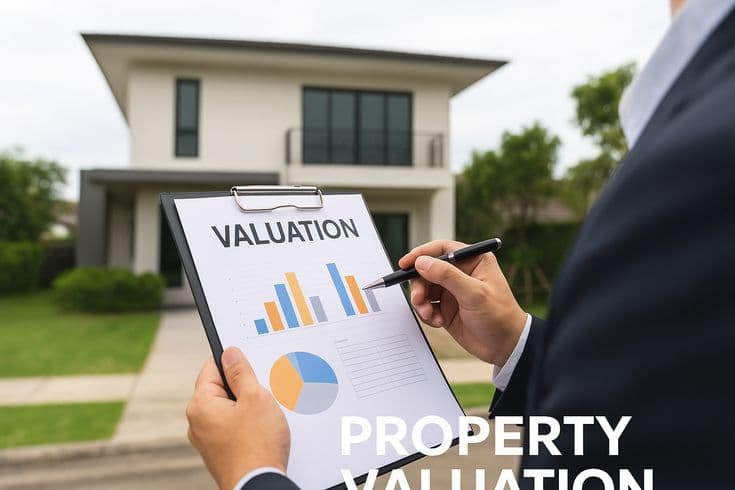
The Great Valuation Debate: AI vs. Human Expertise
As AI valuation tools become mainstream in the UAE property market, a critical question arises: are they as accurate as a seasoned human appraiser? Or do they fall short on the nuances that only experience can provide?
This analysis puts both methods head-to-head, using real-world data from the UAE market to determine where each excels and where the smart investor should place their trust.

Accuracy: The Numbers Tell the Story
In data-rich areas like Dubai Marina, Downtown Dubai, and Business Bay, AI valuations achieve an accuracy rate of 92-96%, often outperforming individual human appraisals.
For unique or luxury properties with few direct comparables (e.g., a custom villa on Palm Jumeirah), AI accuracy drops to 82-88%, as the algorithm lacks sufficient data points. Here, an experienced appraiser's judgment is invaluable.
The key takeaway is that neither method is universally superior. The best approach depends on the property type and market context.

Speed, Cost, and Scalability
Speed: AI delivers valuations in seconds. A traditional appraisal takes 3-7 business days. In a fast-moving market, this speed advantage is a significant practical benefit.
Cost: An AI valuation is typically free or low-cost. A professional appraisal in the UAE costs AED 2,500-5,000+. For initial screening and research, AI is the clear winner on cost.
Scalability: An investor comparing 50 properties can get AI valuations for all of them instantly. Commissioning 50 manual appraisals would be impractical and prohibitively expensive.

The Ideal Strategy: A Hybrid Approach
The smartest market participants in 2025 use a hybrid approach:
Step 1 - AI Screening: Use AI valuation to screen the market, shortlist properties, and quickly identify fair-value deals or overpriced listings.
Step 2 - Human Due Diligence: For the final 1-3 properties on your shortlist, commission a professional appraisal to verify the AI estimate and assess qualitative factors like property condition and renovation quality.
This hybrid method gives you the speed and scale of AI with the nuance and depth of human expertise, ensuring you make the best possible decision.

Use Both. Win Every Time.
The AI vs. manual valuation debate is not about choosing one over the other—it's about understanding when to use each. AI excels at speed, scale, and objectivity. Human appraisers excel at nuance and qualitative judgment.
By combining both, you get a valuation strategy that is faster, more comprehensive, and ultimately more accurate than either method alone.
Ready to experience AI-powered real estate?
Discover how Hayy.AI can transform your property search, investment analysis, and market intelligence.
Explore Hayy.AI →