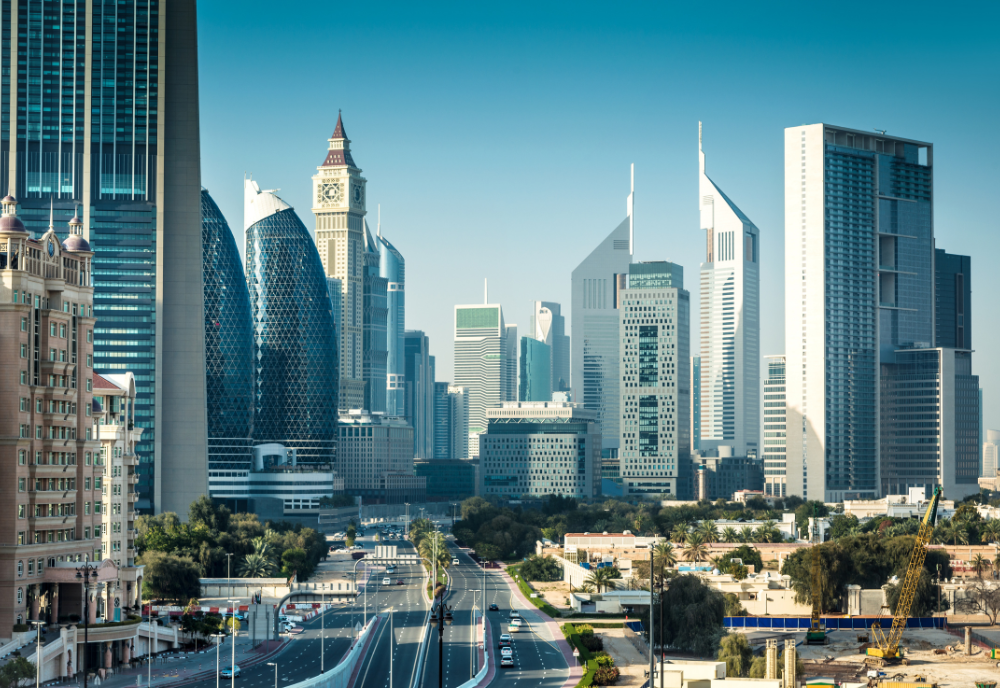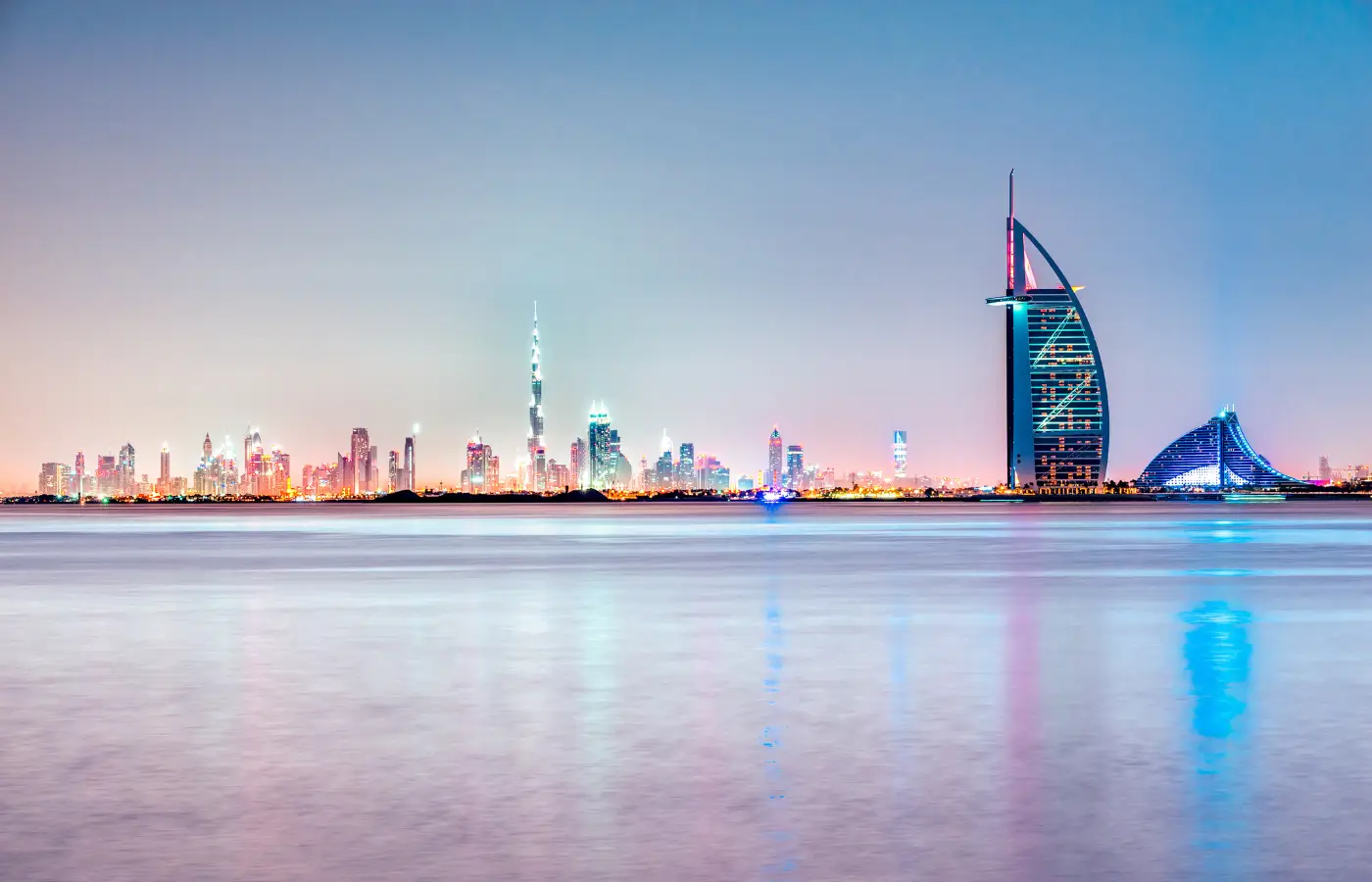
Dubai's skyline continues to evolve as thousands of new residential units enter the market
Key Takeaways
- Over 150,000 new homes will be delivered between 2025-2027, representing a 20% increase in Dubai's housing stock
- Property prices are forecasted to see a modest correction beginning in 2026
- Dubai's population reached 3.9 million in 2024, growing 6% year-over-year
- The emirate now hosts over 80,000 millionaires—double the figure from a decade ago
- Villa prices surged 20% in late 2024, while apartments rose 18%
- Major developers have reduced leverage from 4.8x to 1.4x, ensuring project continuity
- Enhanced escrow regulations now protect off-plan buyers across the UAE
The UAE property market stands at a pivotal juncture. After years of remarkable price appreciation, a significant shift is on the horizon that could reshape the landscape for buyers, renters, and investors alike.
According to a recent analysis by Moody's Ratings, home prices across the UAE could begin moderating in 2026 as a substantial wave of new residential supply enters the market. With approximately 150,000 new apartments and villas scheduled for delivery between 2025 and 2027, the dynamics of supply and demand are set to rebalance.
For residents who have weathered years of escalating rents and competitive buying conditions, this development signals a potential turning point. But what exactly does this mean for different market participants, and how should you position yourself for the changes ahead?
In this comprehensive analysis, we break down the key factors driving this market evolution, examine the outlook for different property types, and provide actionable insights tailored to your specific situation—whether you're looking to buy, rent, or invest.
Understanding the Supply Surge
The numbers tell a compelling story. Between 2025 and 2027, the UAE—particularly Dubai—will witness one of its most significant residential delivery cycles in recent memory.
An estimated 150,000 new residential units are in the pipeline, representing approximately a 20% expansion of Dubai's existing housing inventory. This isn't merely incremental growth; it's a transformational increase that will fundamentally alter market dynamics.
Moody's Ratings projects this supply influx will trigger what they describe as a 'modest price correction starting in 2026.' For context, this doesn't indicate a market crash or dramatic decline—rather, a natural recalibration as supply catches up with the demand that has driven prices upward over recent years.
What 'Modest Correction' Really Means
A modest correction typically refers to a price adjustment of 5-15%, allowing the market to find a more sustainable equilibrium between supply and demand. This differs significantly from a market downturn or crash.
Why Demand Remains Resilient
While supply is expanding, the demand side of the equation remains remarkably robust. Several structural factors continue to underpin housing requirements across the UAE, suggesting that any price correction will be orderly rather than disruptive.
Market Outlook Summary
Moody's characterizes the overall market outlook as 'stable over the next 12 to 18 months, supported by strong demand fundamentals and macroeconomic resilience.'
Population Growth Dynamics
Dubai's population trajectory continues its upward momentum. In 2024, the emirate's population expanded by 6% to reach 3.9 million residents—a growth rate that outpaces most global cities.
This expansion is driven by multiple factors: strong economic performance, attractive visa policies including the Golden Visa program, and Dubai's positioning as a global business and lifestyle hub.
Perhaps more significantly, household sizes are contracting. The average household now comprises 3.9 people, down from 4.4 in 2019. This demographic shift means that even with stable population growth, the number of housing units required increases proportionally.
Wealth Migration to Dubai
Dubai has emerged as a premier destination for global wealth. The emirate now hosts more than 80,000 millionaires—a figure that has doubled over the past decade.
This influx of high-net-worth individuals creates sustained demand at the premium end of the market. Evidence of this trend is clear: during the first quarter of 2025 alone, over 590 properties priced above AED 20 million were sold—the highest quarterly volume in two years.
These ultra-luxury transactions are largely insulated from broader market corrections, as wealthy buyers are less price-sensitive and often acquire properties for lifestyle or diversification purposes rather than pure investment returns.
Apartments vs Villas: Divergent Trajectories
Not all property segments will experience the correction equally. Understanding these nuances is crucial for making informed decisions.
Villa vs Apartment Market Performance (Late 2024)
| Traditional | AI-Powered |
|---|---|
| Apartments: 18% YoY price increase | Villas: 20% YoY price increase |
| Higher supply incoming | Limited new supply |
| More price-sensitive segment | Lifestyle-driven demand |
| Sharper potential correction | Modest growth slowdown expected |
Villa Market Outlook
Villas have been the standout performers in the post-pandemic market. In late 2024, villa prices registered a remarkable 20% year-over-year increase, significantly outpacing other property categories.
This surge reflects fundamental shifts in buyer preferences—remote work flexibility, desire for private outdoor space, and growing families seeking more room. These lifestyle factors continue to sustain villa demand.
However, Moody's cautions that growth will moderate as more villa communities are delivered. While demand remains solid, the pace of price appreciation is expected to slow considerably from current levels.
Apartment Market Dynamics
Apartments recorded an 18% price increase in late 2024—impressive, but trailing villa performance. The outlook for this segment is more nuanced.
Moody's suggests that apartments, particularly in mid-market locations, may experience more pronounced price adjustments once supply outpaces demand. This is because a significant portion of the incoming inventory comprises apartment units.
For buyers targeting this segment, patience may be rewarded. Those willing to wait until 2026 or beyond could find improved negotiating conditions and better value propositions.
Developer Financial Resilience
One reassuring aspect of the current cycle is the financial strength of major developers. Unlike previous market corrections, today's builders are exceptionally well-capitalized.
This financial stability has significant implications for buyers and the broader market. It means projects are more likely to be completed on schedule, developers can weather temporary price softness without distress, and the risk of abandoned or delayed projects is substantially lower than in previous cycles.
What This Means for Project Delivery
Strong developer finances translate to reliable project execution. According to Moody's, this means builders can 'keep projects moving, even if prices soften'—reducing the risk of stalled developments that plagued earlier market cycles.
- 1Emaar's Revenue Backlog: Surged to AED 129 billion in 2025, up from AED 25 billion in 2020—a five-fold increase that provides exceptional visibility and financial cushion
- 2Reduced Leverage Ratios: Average developer leverage has dropped dramatically from 4.8x in 2020 to just 1.4x in 2025, indicating much healthier balance sheets
- 3Profitability Surge: Combined profits for the six largest UAE developers reached AED 46 billion over the past year, compared to AED 12 billion five years earlier
Enhanced Regulatory Safeguards
The UAE has implemented substantial regulatory reforms over the past decade, creating a more transparent and secure environment for property buyers.
These changes represent a significant evolution from earlier market cycles and provide meaningful protection for those entering the market today.
"These reforms help safeguard buyers but also support long-term growth by mitigating systemic risks.
- **Escrow Account Requirements**: Off-plan buyers' funds must now be deposited into regulated escrow accounts, only released to developers upon achievement of verified construction milestones
- **Stricter Launch Prerequisites**: Developers must secure land ownership and necessary approvals before commencing sales, preventing speculative project launches
- **Enhanced RERA Oversight**: The Real Estate Regulatory Agency maintains active supervision of all registered projects and developer compliance
- **Sharjah Escrow Law**: A new escrow regulation takes effect in 2025, bringing Sharjah's buyer protections in line with Dubai and Abu Dhabi standards
Strategic Implications: What This Means for You
Different market participants should approach the coming changes with tailored strategies. Here's our analysis based on your specific situation:
If You're Planning to Buy
The incoming supply wave works in your favor. From 2026 onwards, expect increased negotiating leverage and a broader selection of properties to choose from.
Consider the timing carefully. If your purchase isn't urgent, waiting until mid-2026 could yield better value, particularly in the apartment segment. However, for villa purchases in prime locations, competition may remain intense.
Focus on developer reputation and financial strength. In a market with price pressure, well-capitalized developers are more likely to deliver quality projects on schedule.
- More choice across price points and locations
- Improved negotiating conditions, especially for apartments
- Potential for better payment terms as developers compete for buyers
- Lower urgency—take time to evaluate options thoroughly
If You're Currently Renting
Relief may be on the horizon. The substantial increase in housing stock should help moderate rental escalations that have characterized recent years.
Apartments are likely to see the most significant rental adjustments, as this segment will absorb the majority of new supply. If you're flexible on location, emerging communities with new inventory may offer particularly attractive rental rates.
Consider your medium-term plans. If buying becomes more accessible in 2026-2027, renting for now and purchasing later could be a strategic approach.
If You're Investing
The investment landscape is evolving, requiring more selective approaches.
Luxury and ultra-luxury segments continue to demonstrate resilience, supported by sustained demand from high-net-worth individuals migrating to Dubai.
Villa investments in established communities should maintain relative stability, though the rapid appreciation of recent years is unlikely to continue.
Mid-market apartments carry higher risk in the near term. If this is your target segment, factor potential price softness into your underwriting and focus on locations with genuine rental demand fundamentals.
- Luxury segment remains supported by wealth migration
- Villas in prime locations offer defensive positioning
- Mid-market apartments require careful location selection
- Focus on rental yield sustainability rather than capital appreciation
Conclusion: A Market Finding Balance
The UAE property market is entering a new phase—one characterized by greater supply, enhanced buyer protections, and more sustainable price dynamics. While this represents a shift from the exceptional growth of recent years, it's fundamentally a healthy evolution.
For residents and investors alike, the outlook remains positive. As Moody's summarizes: despite rising supply, the UAE housing market **'will remain stable'**—providing security for renters, opportunity for buyers, and sustainable returns for long-term investors.
The key is understanding these dynamics and positioning yourself accordingly. Whether you're looking to buy your first home, upgrade your current property, or build an investment portfolio, the coming years will offer opportunities for those who approach the market with knowledge and patience.
At Hayy.AI, we're committed to helping you navigate these market transitions with data-driven insights and AI-powered analysis. The future of UAE real estate is evolving—and so are the tools available to help you make smarter decisions.
Get personalized property insights powered by AI
Explore Hayy.AIFrequently Asked Questions
TOPICS
WRITTEN BY

Ahmad Al-Rashid
Senior Real Estate Market Analyst
Ahmad brings over 12 years of experience analyzing GCC property markets. He specializes in market forecasting and investment strategy for the UAE real estate sector.